

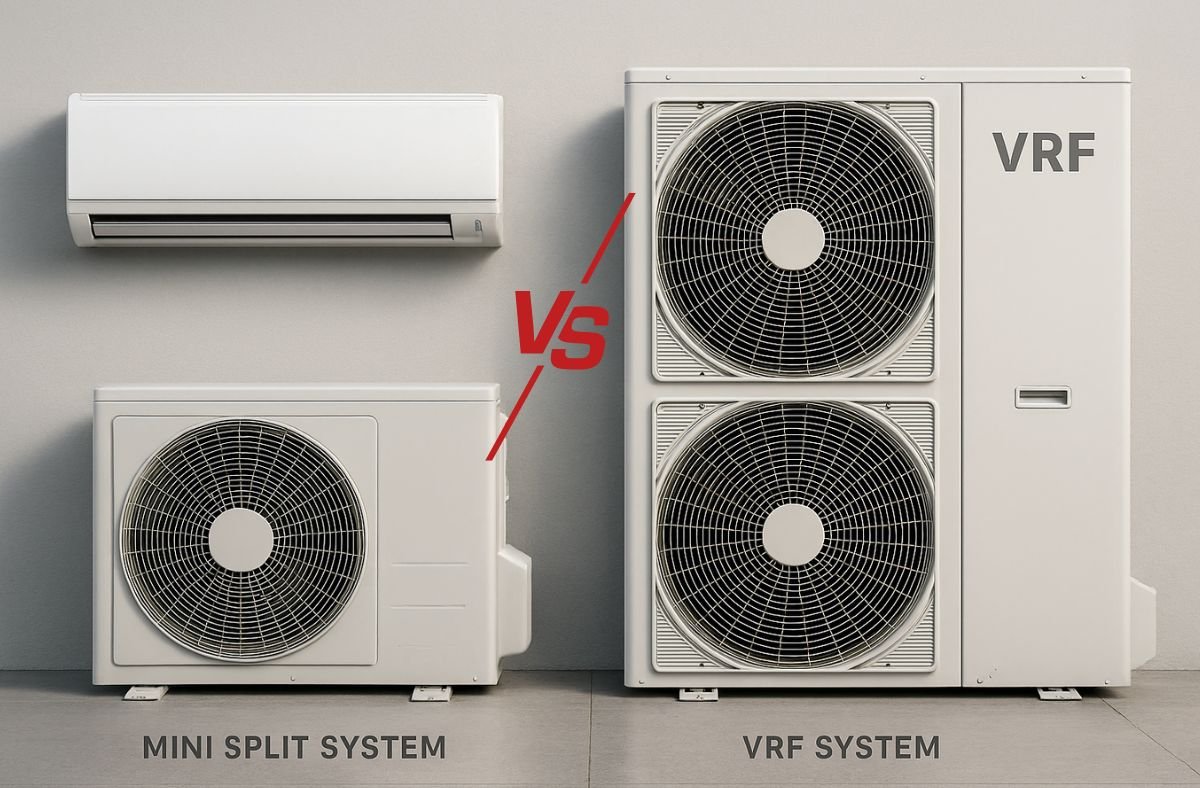
When it comes to ductless HVAC solutions, two terms often come up: VRF (Variable Refrigerant Flow) and Multizone systems. While they may seem similar at first glance, they serve different needs and offer distinct advantages. If you’re a homeowner or business owner exploring energy-efficient climate control, understanding the difference between VRF and Multizone systems is key.
What Is a Multizone Mini Split System?
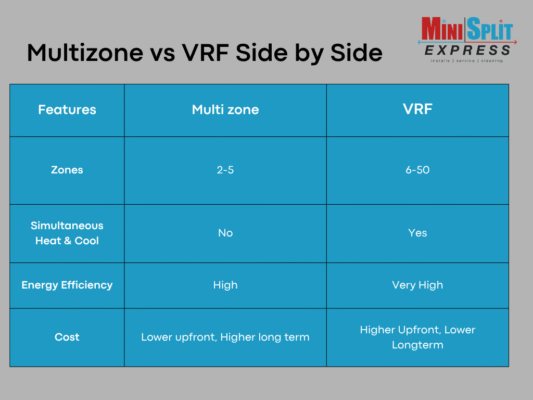
A Multizone mini split system connects one outdoor unit to multiple indoor units. Each indoor unit can be controlled independently, allowing for customized comfort in different rooms or “zones.” However, you can not heat and cool at the same time with the same outdoor unit.
Key Features:
- Ideal for homes with 2–5 rooms
- Each zone has its own thermostat
- Great for residential use
- Lower upfront cost than VRF systems
Best For:
Homeowners who want to heat or cool multiple rooms without installing ductwork.
Mini Splits and VRF systems are distinct technologies, despite sharing the direct expansion principle and similar indoor unit styles. Mini Splits (especially single-zone) offer simpler, lower-cost solutions for smaller applications. Multi-zone Mini Splits provide basic zoning.
What Is a VRF System?
VRF (Variable Refrigerant Flow) systems are more advanced and typically used in commercial or large residential applications. They also connect multiple indoor units to a single outdoor unit—but with a twist: they can modulate the amount of refrigerant sent to each indoor unit based on demand.
Key Features:
- Supports dozens of indoor units
- Simultaneous heating and cooling in different zones
- Highly energy-efficient
- Advanced controls and diagnostics
Best For:
Large homes, office buildings, or mixed-use spaces where precision and scalability are essential.
VRF vs Central Air Conditioning?
Traditional “Central Air Conditioning” usually refers to systems (like a furnace paired with an outdoor condenser and extensive ductwork) that condition an entire house, often controlled by a single thermostat with limited zoning capabilities.
VRF systems represent a form of centralized air conditioning because one outdoor unit (or a connected bank of units) serves multiple indoor zones. However, unlike traditional central air, VRF offers:
- Independent Zone Control: Each indoor unit can be set to different temperatures (within system mode limits – e.g., all cooling or all heating, unless it’s a heat recovery VRF).
- Individual Temperature Sensing: Each VRF indoor unit typically has its own temperature sensor, rather than relying on one central thermostat.
While VRF can be monitored and managed from a central controller or BMS, its ability to provide granular zone control distinguishes it from traditional central AC. It’s better described as a highly advanced, zoned, centralized DX system.
