

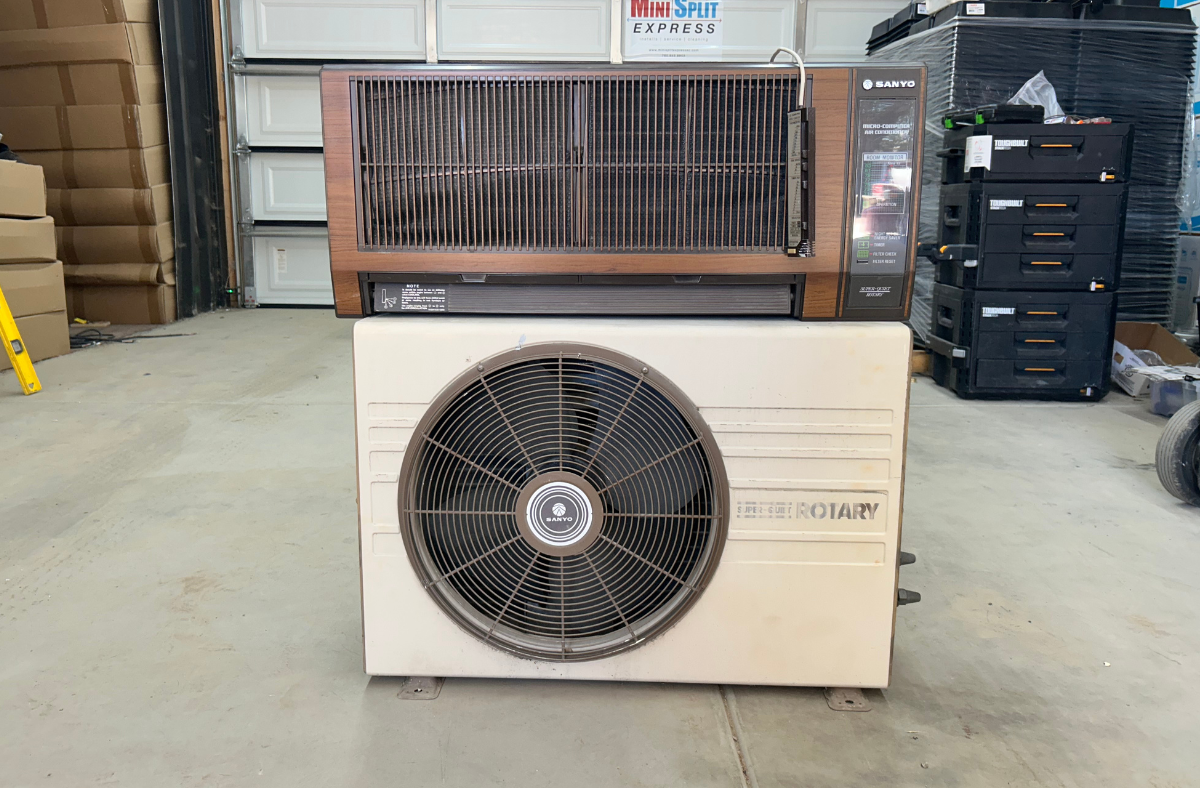
In 1976, Sanyo mini split systems helped reshape residential climate control. These units introduced ductless split technology to homeowners. At the time, most homes used bulky, fuel-based systems. Sanyo’s electric-powered units offered a compact and efficient alternative.
The hallmark of the 1976 Sanyo units was their split design. Each system paired a wall-mounted indoor unit with an outdoor condenser. This setup allowed targeted cooling in specific rooms. It reduced energy waste and improved comfort. Copper refrigerant lines connected the units, simplifying installation across various home layouts.
Efficiency
Even in the mid-70s, Sanyo focused on energy efficiency. SEER ratings weren’t standardized yet, but performance was above average. Older central systems had SEER ratings between 8 and 10. Sanyo mini splits often reached 16 or higher. Some models even exceeded SEER 20, doubling efficiency in many cases.
These systems featured quiet compressors and basic programmable controls. Their durable construction ensured long-term reliability. Homeowners appreciated the reduced noise and room-specific temperature control.
Indoor units included washable filters and directional airflow controls. This customization was rare in that era. Outdoor condensers used corrosion-resistant materials and handled harsh weather well. Many units remained operational for decades.
Legacy
Modern ductless systems owe much to Sanyo’s 1970s innovations. The 1976 models introduced zoned comfort, electric-only operation, and modular design. These concepts still define today’s HVAC systems.
For homeowners and HVAC enthusiasts, the 1976 Sanyo mini split represents more than old equipment. It marks a turning point in comfort, efficiency, and design.
